
A solar furnace is an advanced device that harnesses concentrated solar energy to achieve very high temperatures for industrial and scientific applications. By focusing sunlight onto a small area, solar furnaces can reach temperatures high enough to melt or vaporize metals and other materials without relying on fossil fuels. This sustainable approach aligns closely with the broader goals of solar and renewable energy solutions, offering an environmentally friendly alternative for heat-intensive processes.
Solar furnaces use mirrors to collect and focus sunlight, converting the sun’s abundant energy into usable heat. This makes them a key technology in the transition toward cleaner industrial processes and solar-based energy solutions.
What is a Solar Furnace?
A solar furnace is a system designed to concentrate sunlight and convert it to thermal energy. It consists of an arrangement of mirrors and lenses that reflect and focus solar rays onto a small focal point where temperatures can exceed 3000°C. These extreme temperatures enable a range of applications, including materials testing, metallurgy, chemical reactions, and power generation.
The core feature of solar furnaces is their ability to achieve intensities and temperatures that conventional solar heating methods cannot. Solar furnaces operate without harmful emissions and reduce dependence on fossil fuels, contributing to the goals of solar and renewable energy initiatives worldwide.
Role of Mirrors in Solar Furnaces
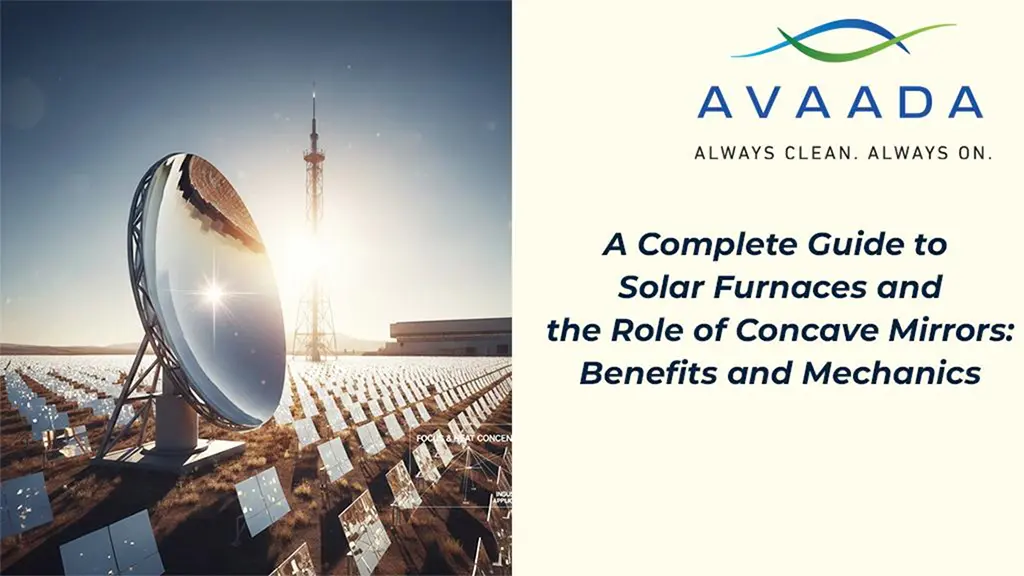
Mirrors are the heart of solar furnaces, responsible for capturing and concentrating sunlight. The typical mirror used in solar furnaces is concave. Concave mirrors are curved inward, like a bowl, which allows them to focus light rays to a single focal point efficiently.
Which Mirror is Used in Solar Furnaces?
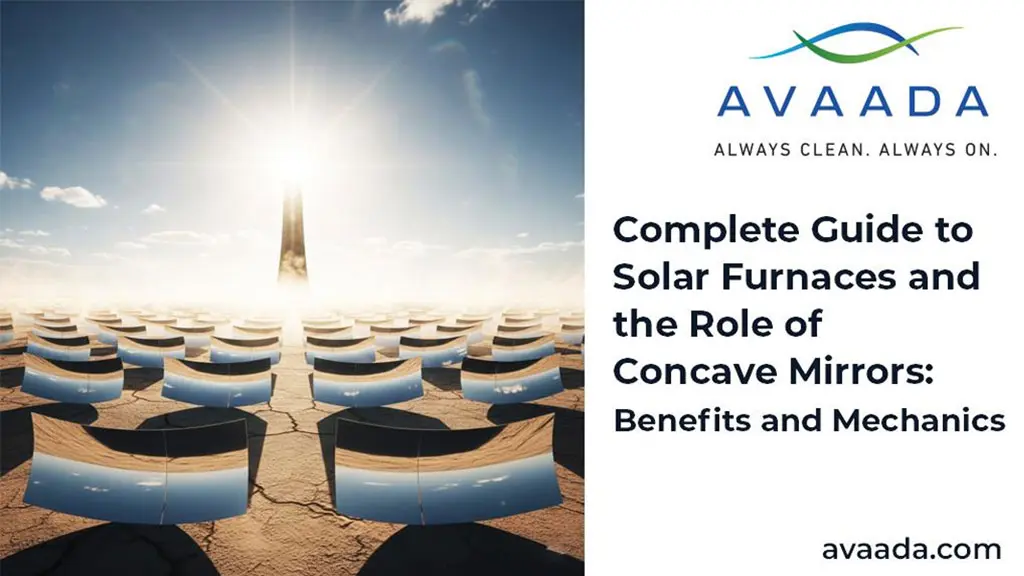
The type of mirror used in solar furnaces is a concave mirror. This mirror shape is ideal for concentrating solar radiation. Its reflective surface curves inward, so parallel rays of sunlight hitting it converge at the mirror’s focal point. This concentration effect results in a dramatic increase in temperature at the focal point, which is essential for the operation of solar furnaces.
Concave mirrors are often large and coated with high-reflectivity materials to maximize sunlight capture and minimize thermal losses. These mirrors can be made from glass with a polished aluminum or silver coating, designed to withstand high temperatures and environmental conditions.
How Do Solar Furnace Mirrors Work?
The concave mirror in a solar furnace collects sunlight over a wide area and reflects it toward a small, focused spot. Several such mirrors may be arranged in an array or in conjunction with a heliostat system (which tracks the sun) to maximize energy concentration onto a single target.
This focused energy source can be used directly for heating samples, driving thermal chemical reactions, or as a heat source for converting thermal energy to electric power through advanced solar solutions.
Benefits of Using Concave Mirrors in Solar Furnaces
Concave mirrors play an important role in solar furnaces by efficiently concentrating sunlight to achieve extremely high temperatures for various industrial and renewable energy applications.
- High Energy Concentration: Concave mirrors focus solar rays to a minimal area, allowing temperatures up to several thousand degrees Celsius.
- Environmental Advantages: They enable industrial processes to use solar energy, reducing fossil fuel dependence and the carbon footprint.
- Efficiency in Solar Solutions: These mirrors enable the conversion of diffuse sunlight into high-quality heat, improving solar furnace efficiency.
- Scalable Applications: From small research setups to large industrial use, concave mirrors can be tailored for various solar furnace designs.
Their ability to focus solar radiation precisely, combined with environmental and scalability benefits, makes concave mirrors indispensable components of modern, high-efficiency solar furnace systems.
Mechanics of Solar Furnaces
The fundamental mechanical principle behind solar furnaces involves optics and thermodynamics. Sunlight, consisting of parallel rays, strikes the concave mirror’s reflective surface. The mirror’s geometry directs the reflected rays inward toward the focal point, creating an intense, localized heat source. The focal spot’s size and temperature depend on the mirror’s curvature, surface quality, and the intensity of sunlight.
Additional components, such as heliostats (movable mirrors that track the sun) or secondary concentrators, can further refine the direction and concentration of solar radiation. The concentrated thermal energy can then be applied to processes such as metallurgy, chemical vapor deposition, or even clean power generation, reinforcing solar and renewable energy integration for industrial usage.
Applications of Solar Furnaces with Concave Mirrors
Solar furnaces equipped with concave mirrors harness concentrated solar energy to provide extremely high temperatures, enabling a variety of industrial and research applications.
- Material testing under extreme heat without combustion emissions.
- Research and development in solar thermal technologies.
- Industrial melting and refining processes using clean energy.
- High-temperature chemical reactions powered by solar heat.
- Potential integration in hybrid solar power generation systems.
These applications demonstrate the versatility and environmental benefits of solar furnaces, making them an essential technology for clean energy and advanced industrial processes.
Avaada’s Position in Solar and Renewable Energy
Avaada is an established player in the solar energy landscape, focusing on manufacturing high-performance solar modules ranging from 610Wp, 630Wp and 720Wp and part of the 700+Wp module class in India. It has an operational capacity of 6 GW, covering the entire supply chain from cells to modules. Avaada’s expertise in n-type TopCon technology enables robust, efficient solar systems that contribute to India’s renewable energy goals.
While Avaada’s core business centers on photovoltaic solar modules rather than solar furnaces, its commitment to solar and renewable energy solutions aligns with sustainable industrial technologies, such as solar furnaces that use concave mirrors. Avaada’s projects, certifications, and strategic focus on areas like Gujarat, Maharashtra, Uttar Pradesh, Madhya Pradesh and Rajasthan underpin its significant role in advancing solar infrastructure and clean energy adoption in India.
Conclusion
Solar furnaces represent a promising, environmentally friendly technology that leverages the power of the sun through advanced optics, particularly concave mirrors, to generate ultra-high temperatures for various industrial and scientific applications. The concave mirror is central to the operation of solar furnaces due to its unique ability to concentrate sunlight into a highly focused beam. This method of harnessing solar energy plays a crucial role in expanding solar and renewable energy solutions globally.
Avaada’s expertise in high-wattage solar modules and integrated manufacturing reflects the dynamism in India’s solar sector. As renewable energy adoption grows, technologies like solar furnaces equipped with concave mirrors will complement photovoltaic systems and add value to India’s clean energy ecosystem.
FAQs
What is a solar furnace, and how does it work?
A solar furnace is a device that concentrates sunlight using mirrors, mainly concave mirrors, to produce extremely high temperatures. It works by reflecting and focusing parallel sun rays onto a single focal point, converting solar energy into intense heat for industrial and research applications.
Which mirror is used in a solar furnace and why?
A concave mirror is used in a solar furnace because it can focus parallel rays of sunlight to a single point. This concentration significantly increases temperature, making concave mirrors ideal for high-heat solar applications.
Why are concave mirrors important in solar furnaces?
Concave mirrors are essential in solar furnaces because they efficiently concentrate sunlight into a small area, enabling temperatures exceeding 3000°C. This makes them suitable for metal processing, material testing, and solar thermal research.
What temperatures can a solar furnace reach?
Solar furnaces can reach temperatures above 3000°C, depending on mirror size, reflectivity, and sunlight intensity. These extreme temperatures allow processes that normally require fossil fuels to run on clean solar energy.
What are the main applications of solar furnaces?
Solar furnaces are used for material testing, high-temperature chemical reactions, metallurgy, solar thermal research, and experimental power generation, all without combustion-based emissions.
How is a solar furnace different from solar panels?
Solar furnaces convert sunlight into thermal energy using mirrors, while solar panels convert sunlight directly into electricity using photovoltaic cells. Solar furnaces are used for heat-intensive processes, whereas solar panels generate electricity.
Are solar furnaces environmentally friendly?
Yes, solar furnaces are environmentally friendly because they use sunlight as their only energy source, produce no direct emissions, and reduce dependence on fossil fuels for high-temperature industrial processes.
Can solar furnaces be used for power generation?
Solar furnaces can be integrated into solar thermal systems that use concentrated heat to produce steam and generate electricity, especially in experimental or hybrid renewable energy setups.
What role do heliostats play in solar furnaces?
Heliostats are movable mirrors that track the sun and continuously reflect sunlight toward a central concave mirror or focal point, increasing efficiency and maintaining consistent heat concentration.
How do solar furnaces support renewable energy goals?
Solar furnaces support renewable energy goals by replacing fossil-fuel-based heat with clean solar heat, lowering carbon emissions, and enabling sustainable industrial and research processes.